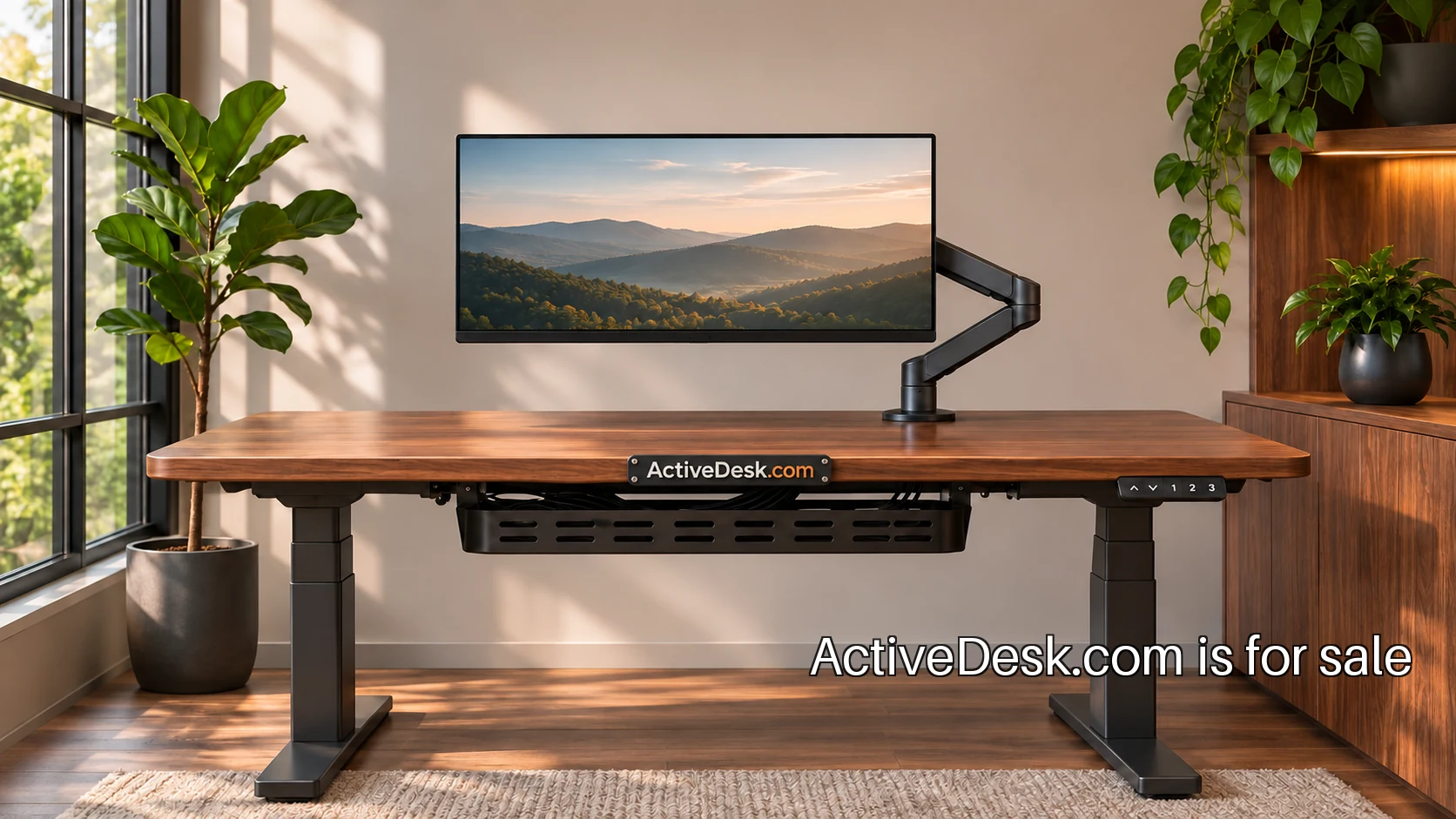
A workspace product business can start with a small, coherent collection. Picture a founder choosing one adjustable desk platform, two useful surface sizes and accessories that have a clear reason to belong beside it. ActiveDesk can be the name across that range, from the product label to the matching address on the assembly guide. The first job is to make the collection understandable enough for a buyer to choose a complete setup.
The customer could be a person furnishing a home office or the manager of a small company equipping a room. Those buyers ask different purchasing questions. A home buyer may need a desk that fits a narrow room and arrives in manageable packages. An office manager may need repeatable configurations, delivery coordination and replacements for parts. Choose one initial customer so the range answers a specific set of questions well.
Give the first collection a clear boundary
A useful starting offer is a desk system with a small set of compatible additions: cable management, a monitor arm option and a modest storage solution. Each addition should solve a problem left by the base configuration. Avoid filling a catalogue simply because a supplier can provide more items. Three well-chosen combinations give the first catalogue a clear shape.
Draw the combinations before placing the first stock order. One could serve a compact laptop setup with an external screen. Another could handle a two-screen workstation. A third could support a shared office where the setup changes between users. Specify what is included in each combination, what the buyer supplies and which components can be added later. That makes the first catalogue a purchasing tool.
Evaluate the whole workstation
A desk is used with a chair, screens, power connections and the person doing the work. The OSHA workstation checklists offer a useful set of topics for evaluating that complete arrangement. Use them to structure product questions and prototype observations, rather than treating a single adjustable feature as an answer for every user.
Ask a supplier to demonstrate the product with the equipment the intended customer will use. Examine the space left for legs, the position of the controls, the cable path and the clearance needed as the desk moves. Check how the product is assembled and how someone replaces a damaged component. A catalogue photograph rarely shows those details, but they will shape the support requests after delivery.
The product specification should distinguish a measured feature from a marketing phrase. Record dimensions, compatible accessories, adjustment limits, supported loads and the source of each claim. The Canadian Centre for Occupational Health and Safety's purchasing guidance is another starting point for matching furniture to users and tasks. A founder can use that process to ask better questions before approving a production sample.
Build support into the offer
Plan the first week after delivery as carefully as the product page. The buyer needs an inventory of parts, legible instructions and a clear route to help. Decide how missing hardware is identified, who authorizes a replacement and what information the buyer should provide. A part number and a useful photograph can make a support exchange easier for everyone involved.
For small office orders, write down the delivery assumptions. Is the shipment taken to the building entrance, the office floor or the final desk position? Does assembly require a separate arrangement? Who removes the packaging? These choices influence the service needed around the physical product. Put the answer beside the order details so the office manager can coordinate people and access.
Find the first route to buyers
A focused collection can be introduced through a detailed product demonstration, a sample installation and conversations with people planning an office move. The founder can show the desk being assembled, adjusted and used with ordinary equipment. That provides material for a product page, a specification sheet and a sales conversation about a real configuration.
A local showroom partner or workplace designer may also be useful if the range fits their projects. Prepare the information they need: dimensions, finishes, samples, lead times and the rules for support. Keep the first distribution experiment small enough to understand where orders come from and which questions repeatedly delay a decision. Those questions can guide the next catalogue revision.
What the name carries
Under ActiveDesk, the founder can introduce a complete workspace range while starting with a limited number of products. The same identity can appear on the desk, the packaging and the place a buyer visits for support. That continuity gives the growing collection a stable home as the founder learns which additions belong in it.
This is one possible business direction for the domain. A good next step is a supplier brief and a working sample of the first configuration, with the full assembly and support experience tested alongside it. The founder then has something concrete to show: a product range with an intended customer, a clear first offer and a name ready to carry the work.